
The UK Practice Toolkit on Climate, Disasters and Protection Claims is a practical, step-by-step guide for UK immigration and human rights practitioners.
Edited by Yumna Kamel (Earth Refuge) and Olivia Clark (Refugee Legal Support), the Toolkit brings together contributions from lawyers, academics and policy experts across the Joint Council for the Welfare of Immigrants, the Refugee Law Initiative at the University of London, Qore Legal and Garden Court Chambers, as well as independent practitioners and consultants.
It is designed to help lawyers identify where climate change and disasters are already relevant to the cases in front of them, and to weave those factors into existing asylum, protection and human rights arguments.
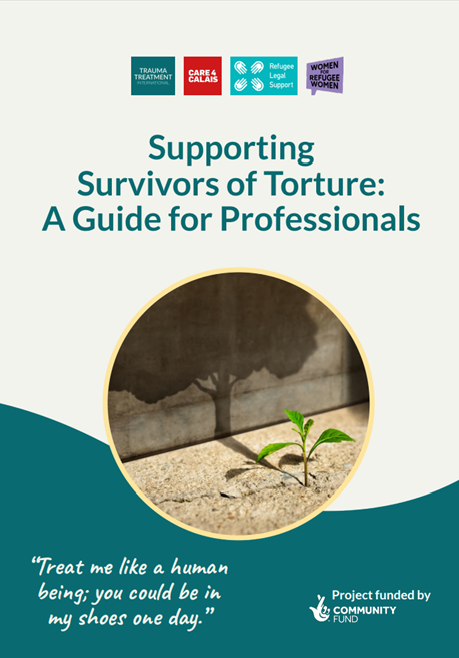
Torture is recognised internationally as one of the most severe human rights violations, and the aftermath has a great cost. It disrupts individuals’ lives, their relationships, family roles, and sense of community belonging. It can silence survivors due to feelings of shame, stigma, fear, or systemic barriers. Its effects ripple outward, influencing entire communities. Together, this can prevent us all from hearing directly what survivors require to thrive
In response, Trauma Treatment International (TTI) has adopted a co-production model to centre survivors’ views on what professionals should prioritise when working with them. Co-production shifts power, restores agency and seeks to prevent people and systems replicating oppression.
Survivors of torture and professionals working with them from RLS, Care4Calais and Women for Refugee Women shared their thoughts in focus groups facilitated by TTI. Drawing from their own experiences, participants expressed what is important to know or do in order to create a trauma-informed approach to working with survivors of torture.
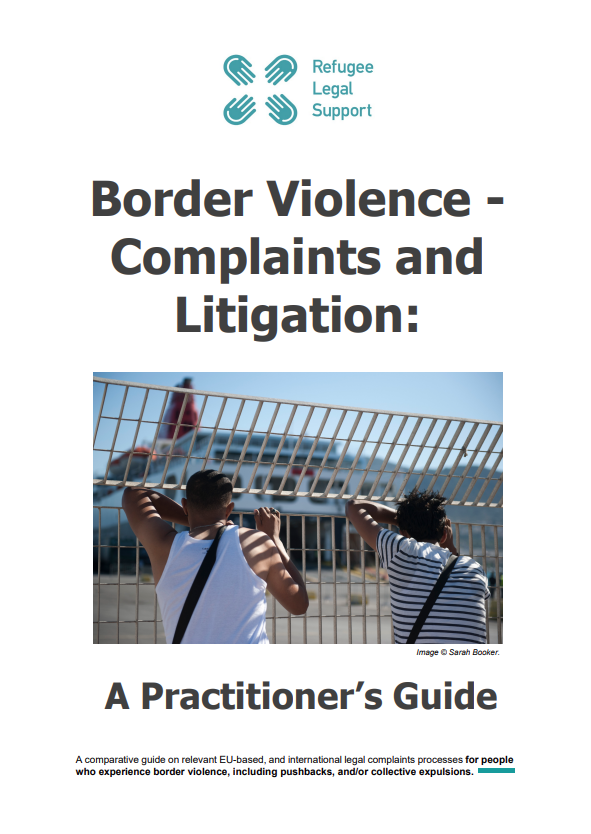
People on the move face not only increasingly dangerous journeys, but being subjected to severe human rights violations at the borders too.
Borders are not human rights-free zones. But reports from international bodies, NGOs, civil society and migrants themselves are increasingly documenting widespread abuses at or in relation to EU borders. For those who experience this violence, justice is rarely within reach. Legal practitioners can and do play a critical role as human rights defenders to challenge impunity, demand accountability, and secure justice for survivors of border violence.
This guide is designed to serve as a resource for legal professionals to advocate individually and collectively for those who have experienced border violence.
Access guidance on how to use the screening forms here.

This report presents the findings of a survey conducted among Afghans whose data was breached by the UK Ministry of Defence (MoD) after they applied for resettlement to the UK under the Afghan Relocation and Assistance Policy (ARAP) or Afghan Locally Employed Staff Ex-Gratia Scheme. It is the first systematic study of the impact of the data breach among affected Afghans, documenting physical and psychological harms, as well as shortcomings with the UK Government’s response.
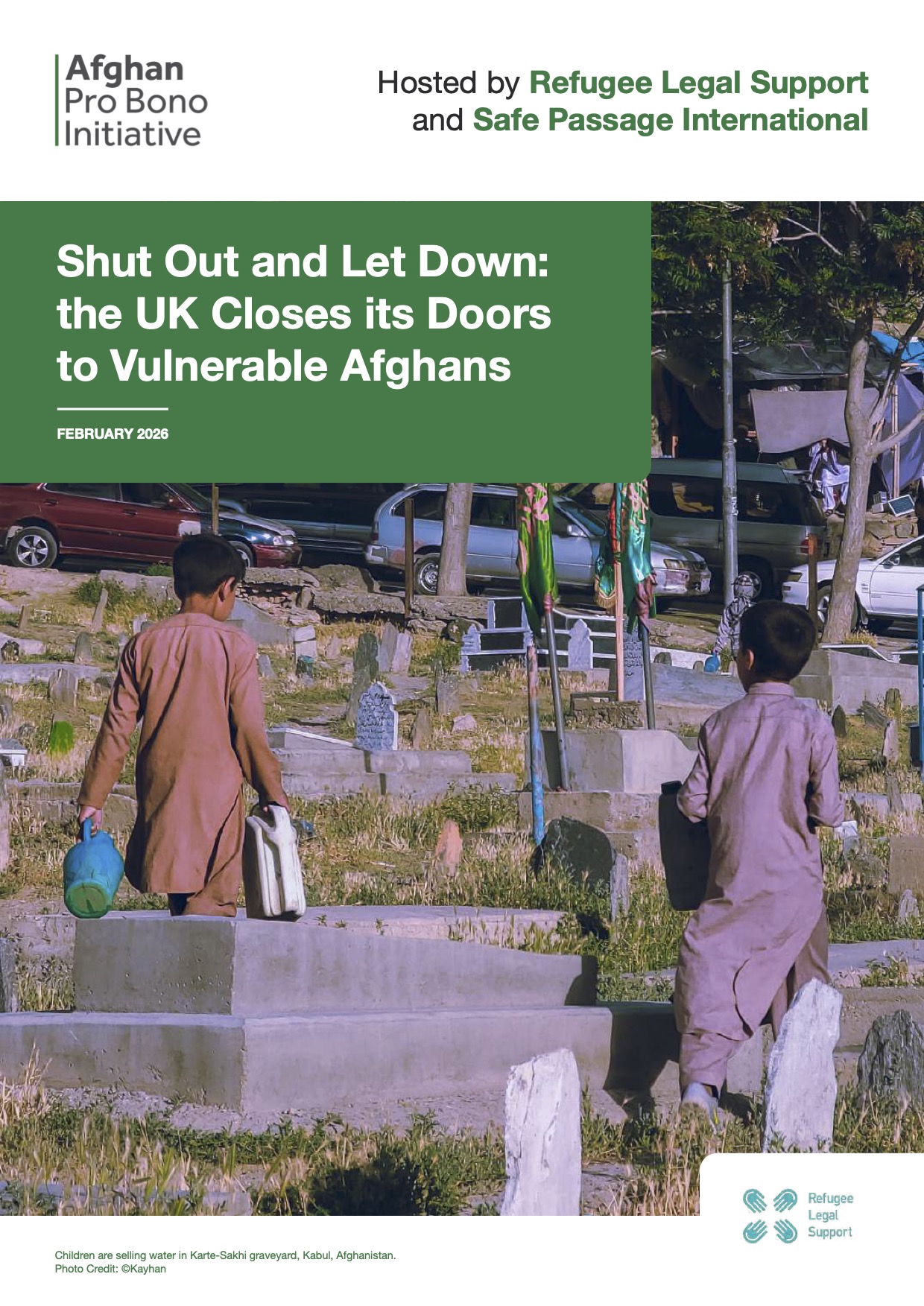
Four and a half years after the Taliban took control in Kabul, Afghanistan remains unstable. The sharp cuts to US overseas aid in 2025 have deepened the humanitarian crisis leaving several million fewer Afghans receiving assistance as a result. 75% of Afghan households cannot meet their daily needs, a situation worsened by the continued exclusion of Afghan women from society.

This report sets out the purpose, method, key findings,and recommendations arising from APBI’s qualitative study of Afghan families that have resettled in the UK. It examines how these families navigated the Resettlement Schemes, access to legal support, and integration in the UK, against the backdrop of the recent scheme closures. The study aims to document the lived experiences of Afghan refugees in the UK.
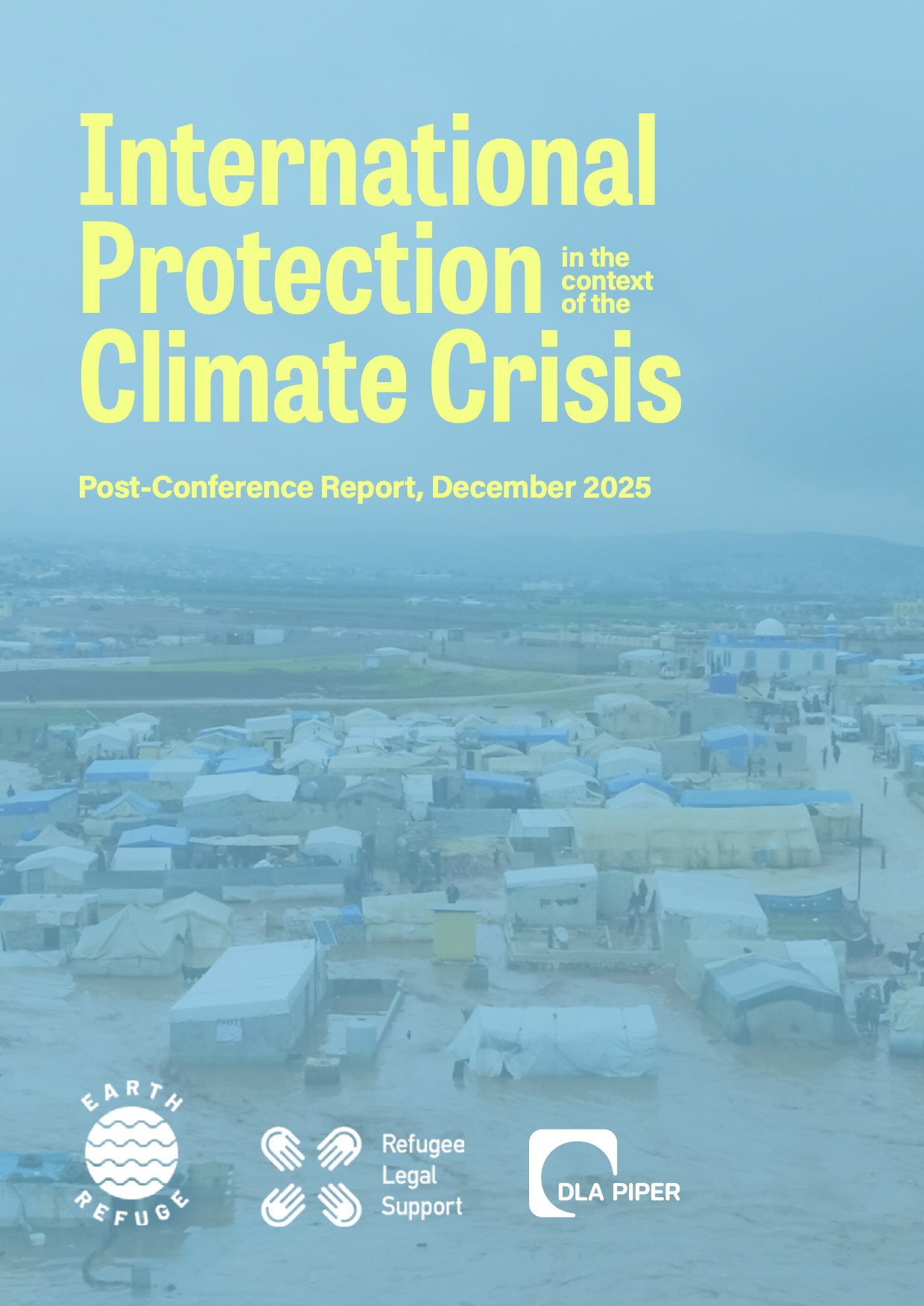
DLA Piper International, Earth Refuge and Refugee Legal Support hosted the first UK conference on international protection in the context of the climate crisis. This half- day conference addressed the urgent and evolving intersection between displacement across borders, the adverse effects of climate change and disasters, and international protection frameworks.

Since our report Voices from the Camps was published in July 2024, living conditions and access to services in Greece’s mainland refugee camps have not improved. Nine months later, people are still isolated and unable to access their basic rights. There have been deaths of residents as well as reports of worsening conditions from people living in camps. For this follow-up report, Mobile Info Team (MIT) and Refugee Legal Support (RLS) spoke with residents of camps that we did not previously have contact with, as well as people we spoke to a year ago who continue to reside in the same facilities. Here, we highlight the enduring and serious deficiencies in living conditions for refugees in Greece.
You can read the report in Greek here.

Still Waiting: The Afghans Abandoned by the UK (produced by the Afghan Pro Bono Initiative (APBI)), sheds light on the unfulfilled promises and bureaucratic hurdles that have left so many Afghans in vulnerable positions. This report builds on APBI’s 2023 report, Two Years of Empty Promises, to emphasise the urgent need for reform within the UK’s Afghan resettlement schemes and family reunion policies.

This report looks at living conditions and access to services for asylum seekers in Greece, drawing on interviews with people living in nine refugee camps on the mainland: Corinth, Katsikas, Kavala, Koutsochero, Lagkadikia, Malakasa, Oinofyta, Ritsona and Serres. With attention often directed to the inhumane, EU-funded Closed Controlled Access Centres on the Aegean islands, the findings of this research reveal a troubling picture of neglect and mismanagement on the mainland as well. This report provides strong evidence that conditions in the mainland camps fall far short of Greece’s legal obligation to provide reception conditions which protect the physical and mental health of people seeking international protection.
You can read the report summary in English here.
You can read the report summary translated into other languages here.
This report presents the findings of a survey conducted among Afghans whose data was breached by the UK Ministry of Defence (MoD) after they applied for resettlement to the UK under the Afghan Relocation and Assistance Policy (ARAP) or Afghan Locally Employed Staff Ex-Gratia Scheme. It is the first systematic study of the impact of the data breach among affected Afghans, documenting physical and psychological harms, as well as shortcomings with the UK Government’s response.
You can read the report summary here.
You can read the report summary in other languages here.
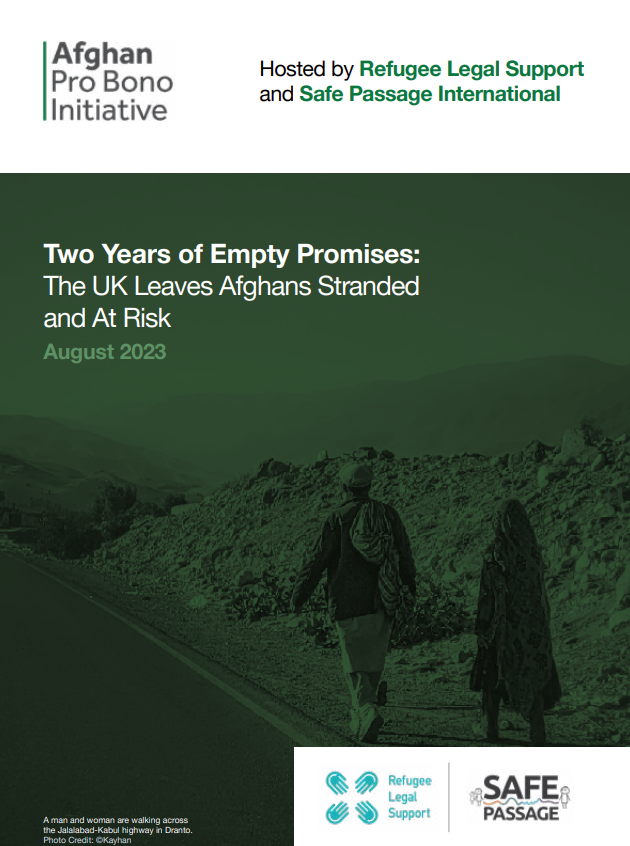
“Two Years of Empty Promises: The UK Leaves Afghans Stranded and At Risk” focuses on the challenges faced by Afghans seeking safe routes to the UK, particularly after the momentous shift in Afghanistan in August 2021, when the government collapsed and the Taliban took control of Kabul. The lack of access to safe routes has caused immense despair, fear, an desperation for many Afghans, leaving them feeling abandoned and trappedin dangerous and uncertain circumstances. For those eligible for resettlement under the Afghan Relocation and Assistance Policy (ARAP) and the Afghan Citizens’ Resettlement Scheme (ACRS), the lengthy delays, inconsistencies, and narrow eligibility criteria of these schemes have been deeply disheartening.

Refugee Legal Support is a registered charity (no. 1191680) in England and a non-profit company in Greece. Refugee Legal Support is registered with the IAA (Ref No: N202000126)
Details of their registration can be found on the IAA Adviser Register: Adviser Register.
RLS is a registered Greek civil non-profit company or "AMKE", whose articles of incorporation can be found below:

.bmp)