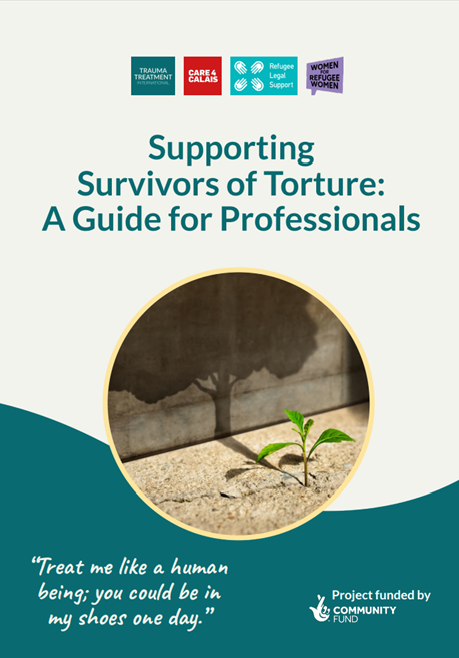
Torture is recognised internationally as one of the most severe human rights violations, and the aftermath has a great cost. It disrupts individuals’ lives, their relationships, family roles, and sense of community belonging. It can silence survivors due to feelings of shame, stigma, fear, or systemic barriers. Its effects ripple outward, influencing entire communities. Together, this can prevent us all from hearing directly what survivors require to thrive
In response, Trauma Treatment International (TTI) has adopted a co-production model to centre survivors’ views on what professionals should prioritise when working with them. Co-production shifts power, restores agency and seeks to prevent people and systems replicating oppression.
Survivors of torture and professionals working with them from RLS, Care4Calais and Women for Refugee Women shared their thoughts in focus groups facilitated by TTI. Drawing from their own experiences, participants expressed what is important to know or do in order to create a trauma-informed approach to working with survivors of torture.

Refugee Legal Support is a registered charity (no. 1191680) in England and a non-profit company in Greece. Refugee Legal Support is registered with the IAA (Ref No: N202000126)
Details of their registration can be found on the IAA Adviser Register: Adviser Register.
RLS is a registered Greek civil non-profit company or "AMKE", whose articles of incorporation can be found below:
.bmp)